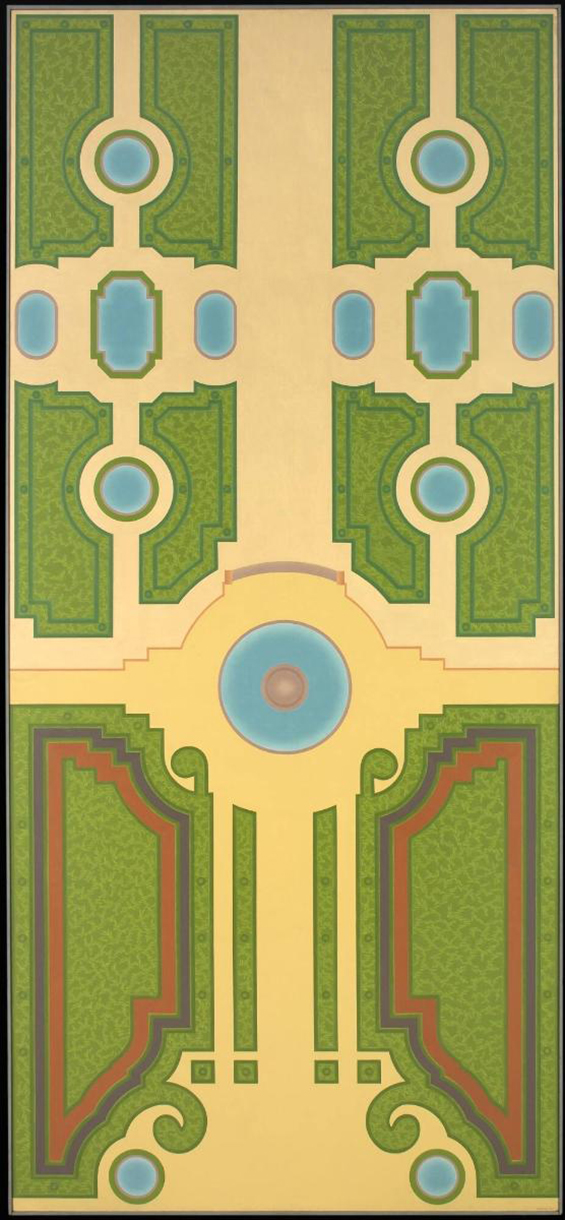
Barbro Östlihn, Drottningholm Park, 1965. © Barbro Östlihn. Photo: Åsa Lundén/Moderna Museet
Drottningholm Park, 1965
Barbro Östlihn
Runtime: 01:54
Narrator: Drottningholm Park by Barbro Östlihn, from 1965
Stand in front of the large painting and let your eyes wander across the surface for a moment.
What did you see first: a park, a map, an ornament, or an abstract image?
Barbro Östlihn moved to New York in 1961. She was one of the few Swedish artists who both worked and exhibited at the heart of the American avant-garde scene in Manhattan during the 1960s.
In New York, she began making large paintings of façades and architectural details she discovered in the city. Sometimes the paintings came so close to abstraction that the title – often an address or a place – gave the clearest clue to the subject.
When Barbro Östlihn travelled to Sweden in the summers, Swedish places also entered her visual world. As here, in Drottningholm Park.
At the time, there was an intense discussion about what painting could be. One important idea was that a painting did not need to create an illusion of depth. Instead, it could show what it actually is: paint on a flat surface.
Östlihn’s paintings can be seen against this background. Freed from almost every illusion of depth, the park is both a real place and a system of colour, lines and forms.
Now it’s time for question:
What happens to your idea of the park at Drottningholm when it is shown not as a lifelike landscape, but through colour and form?
Sound Effect by freesound_community from Pixabay